Why Every Mahjong Player Needs a Quality Mat
It is not just a tablecloth. A proper mahjong mat changes how the game sounds, how it feels, and how long your tiles last.
By The Silk Mahjong Editors
The first time you play on a proper mat, you notice the sound. Not silence - mahjong should never be silent - but a softer, warmer click. The tiles land with weight rather than rattle. The whole table feels, somehow, more deliberate.
A good mat does five things at once. Most players who try one stop being able to play without one.
1. It protects your tiles
A standard mahjong set is no small investment. Quality tiles - whether bakelite, urea, melamine or weighted resin - chip when they meet bare wood. Over a year of regular play, you will see scratches on the faces and dents on the corners.
A cushioned surface absorbs the impact. Your tiles stay clean, sharp, and worth handing on.
2. It protects your table
The other side of the same coin. Polished dining tables, antique card tables, glass surfaces - all of them mark up under tiles. We have seen heirloom dining tables retired from mahjong service after a single year of unprotected play.
A mat is a cheap insurance policy on a piece of furniture you actually love.
3. It muffles the noise
Mahjong is, by tradition, a loud game. The "twittering of the sparrows" - the sound of tiles being shuffled face-down at the start of a hand - is part of the ritual. Played on bare wood, it is genuinely loud. Played on a hard cloth, it is brittle.
A proper mat tunes the volume down without removing it. The result is a sound that carries the rhythm of the game without overwhelming the conversation.
4. It defines the play surface
There is a small psychological lift the moment a mat goes down. The dining table becomes a games table. The evening starts. Casual hand-shuffling becomes deliberate.
It is the same effect as a good tablecloth at dinner: you didn't strictly need it, but the meal feels different with it there.
5. It signals care
The hosts who invest in a proper mat are - in our wholly unbiased view - the hosts who tend to host well. The mat is part of a wider commitment: that the evening is worth the small fuss of doing it properly.
What to look for
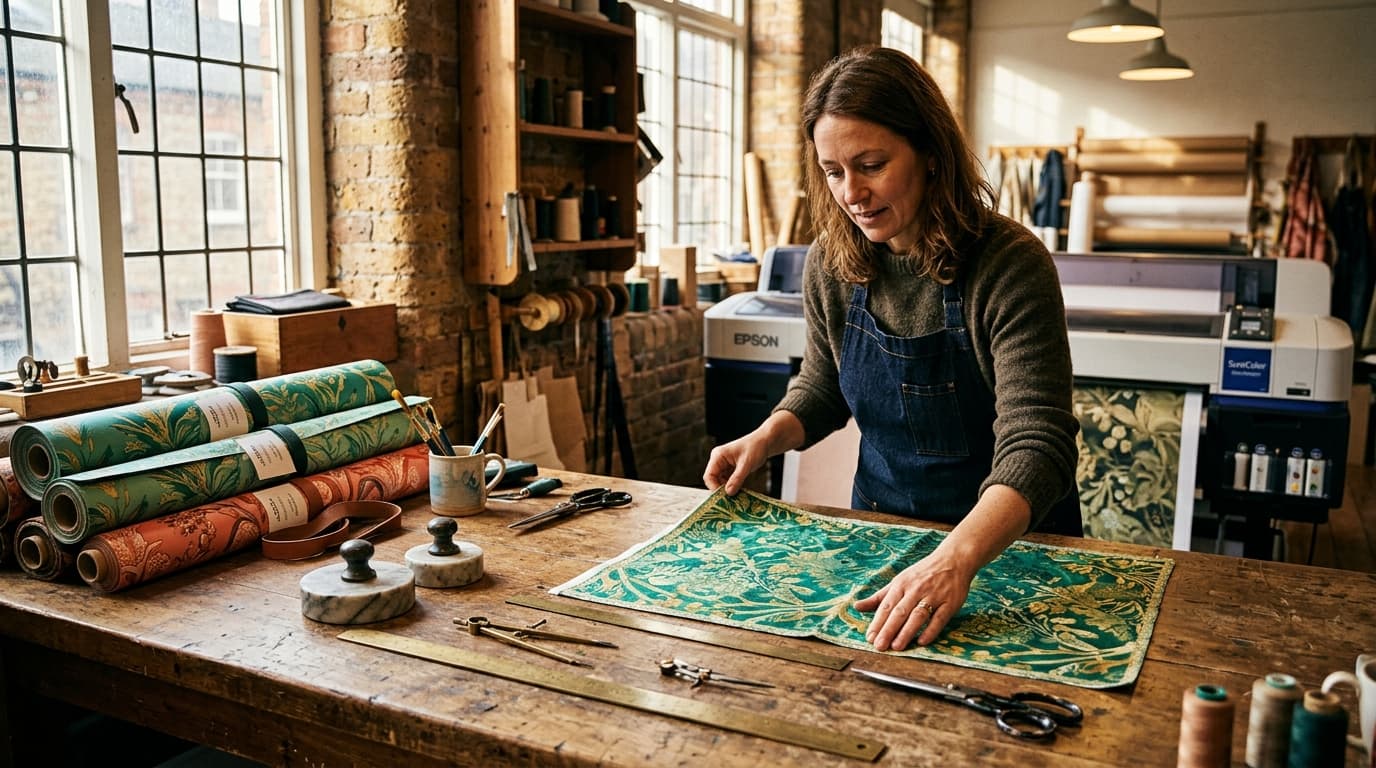
Not all mats are made the same. After two decades of printing custom textiles in London, here is what we look for:
A great mahjong mat is a tight surface with a soft heart.
- Weight. Light mats slide. Look for 600 gsm or heavier for leatherette, or a fully cushioned neoprene at 1000 gsm.
- Surface. A printed leatherette gives you a tile-friendly grip without rolling under the hand. A neoprene mat is softer, pads the tiles more, and rolls up for travel.
- Edges. Hemmed or sealed edges last. Raw cuts fray.
- Print quality. The print should be sharp at arm's length. If you can see banding or pixels in the pattern, the file or the press wasn't up to it.
- Size. Plan for a mat large enough for four racks and the play area, with a little breathing room. Too small is worse than too large.
A note on silk
In case you were wondering: although we are called Silk Mahjong, our mats are not made of silk. The name evokes the heritage and tactility we design for. But silk would be the wrong material for a mahjong table - too slippery, too delicate, too quick to stain.
Our two surfaces - heirloom leatherette (600-700 gsm) and cushioned neoprene (1000 gsm) - are chosen because they hold up to the way mahjong is actually played: the tiles, the drinks, the laughter, the years.
If you have only ever played on a bare table or a borrowed cloth, treat yourself. The night will sound different.