Mahjong Etiquette: Unwritten Rules Every Player Should Know
Mahjong has rules in the rulebook and rules at the table. Knowing both is what makes you a player people want to invite back.
By Silk Mahjong

Every game has its written rules and its unwritten ones. The rulebook tells you how to win; the unwritten code tells you how to play in a way that makes everyone glad you were there. Mahjong has been a social game for well over a century, and in that time it has accumulated a rich set of table conventions that go beyond the official rules. Some of these are about fairness. Many are about comfort. All of them are about making the game work as the warm, convivial ritual it was always meant to be.
Whether you are sitting down for your first game or your five hundredth, knowing these unwritten rules will make you a better and more welcome player.
Call Your Tiles Clearly
When you discard a tile, say its name out loud as you place it face-up in the center of the table. Say it clearly. Say it loud enough that all four players can hear you. "Three Bam." "Seven Dot." "West Wind." This is not optional; it is fundamental to fair play.
Other players cannot always see your discard immediately, especially if they are studying their own rack. Calling the tile gives everyone the chance to know what was discarded and respond in time. Mumbling, trailing off, or placing the tile silently is unfair and can cause disputes. Get in the habit of saying the tile name every single time, from your first game onward.
The habit also has a secondary benefit: it slows you down just enough to make sure you are placing the tile you intended to place. More than a few beginners have accidentally discarded a tile they needed because they reached for the wrong one in a moment of distraction.
Do Not Take Back a Discard
Once a tile leaves your hand and touches the table, it is gone. You cannot change your mind, retrieve it, and discard a different tile instead. This is a firm rule in virtually every version of the game, and for good reason: other players may have already adjusted their thinking based on what they saw you put down.
The same principle applies to calling tiles. If you say "Mah Jongg" and then realize you have made a mistake, there are consequences. If you call for a tile and then decide you do not want it, there are consequences. The lesson is to think before you act. Take the half-second to look at what you are about to do before committing to it. The game rewards deliberateness.
Charleston Etiquette: What Happens in the Pass Stays in the Pass
The Charleston is a beautifully social moment in each hand, and it comes with its own specific code of conduct.
Do not count tiles you receive. When a neighbor pushes three tiles toward you during a Charleston pass, scoop them up and add them to your rack without making a show of counting them or sorting through them slowly in view of the table. Other players should not be able to tell, from your reaction, whether the tiles you received were good or bad for your hand.
Do not reveal what you passed. After the Charleston is over, the tiles you gave away are gone. Do not announce "I just passed you three Flowers" or "I had to give away my 8 Crak." Sharing this information after the fact gives others unnecessary insights into your hand history and can create unfairness.
Do not react visibly. The Charleston involves bluffing, to a small extent. A big smile when you receive certain tiles or a grimace when you do not gives information. Play it cool. Maintain the same expression regardless of what lands in your rack. This is part of what makes the opening of each hand so interesting.
Keep Your Rack Tidy and Your Tiles Concealed
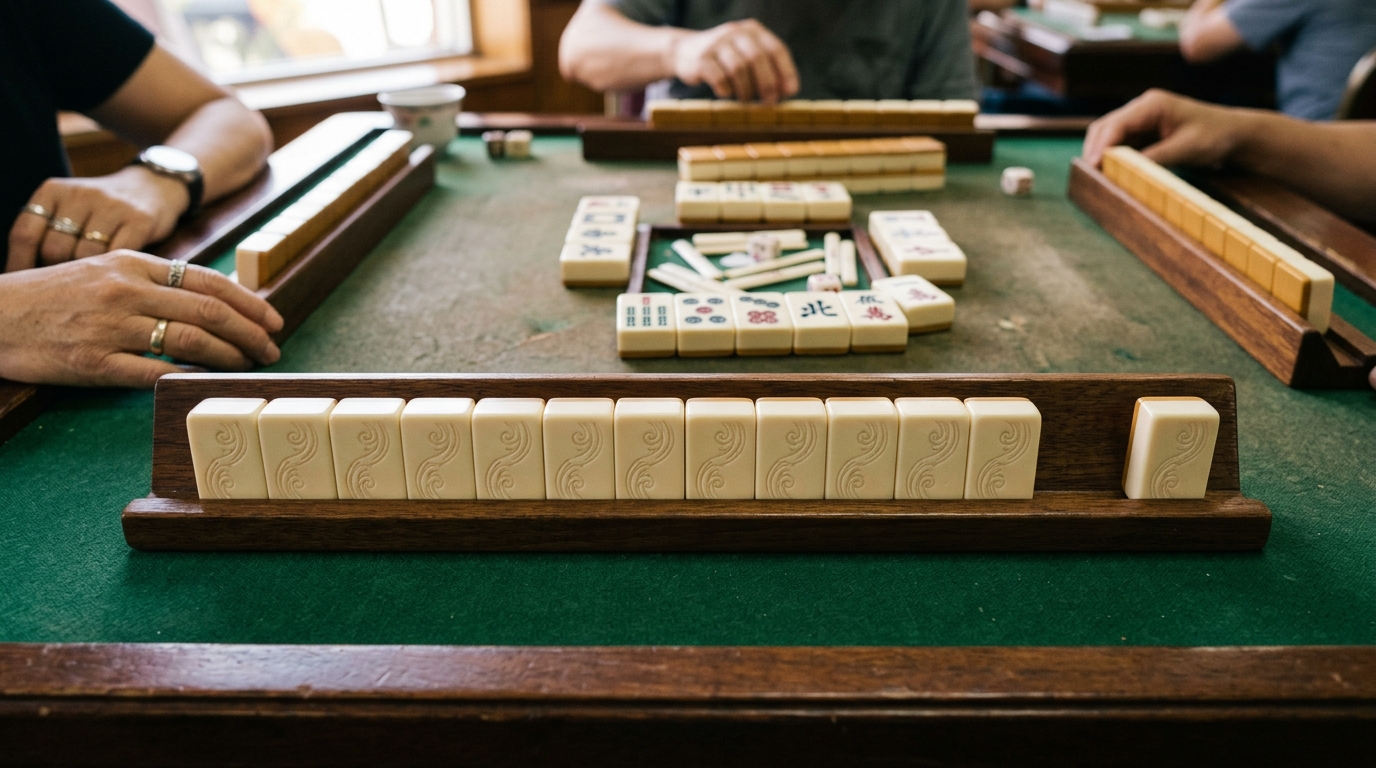
Your rack is your private space, and its contents should remain private. Keep your tiles upright and grouped in a way that does not allow neighboring players to see them from an angle. When you add new tiles, tuck them in quickly rather than leaving them visibly separated from the rest of your hand.
A tidy rack also signals respect for the game and the table. When tiles are jumbled or spilling over the edge, it creates confusion and slows play. Take thirty seconds during the first couple of draws to organize your hand, and then maintain that organization as the game progresses.
Do Not Coach or Comment on Other Players' Discards
This one matters more than people sometimes realize. When another player makes a discard, keep your reaction neutral. Do not say "Oh, interesting choice." Do not say "I wouldn't have thrown that." Do not make any remark that could be interpreted as commentary on whether the move was wise.
This rule protects the experience of every player at the table. People are entitled to make their own decisions without an audience providing live commentary. Even well-intentioned comments can feel condescending, and anything that implies a player made a mistake creates tension.
The same applies to coaching newer players mid-game. If someone at the table is still learning, wait until after the hand is over to offer any observations. Guidance during play can be a gift or an intrusion depending on how it lands, and the safest approach is to hold it until the hand is complete and offer it gently only if asked.
Joker Swaps: Handle Them Graciously
The Joker swap is one of the more interactive moments in American Mahjong. When a player reaches across the table to swap a real tile for your exposed Joker, they are following a legal rule, not doing something to you personally. Accept it graciously.
Sighing heavily, making a face, or muttering about losing a Joker creates awkward energy and puts the swapping player in an uncomfortable position for following the rules. Experienced players know that exposed Jokers are targets, and they factor that risk in when deciding whether to expose a set. The swap is part of the game.
On your side, if you are the player doing the swap, be clear and ask before reaching if you are newer to the game. "May I swap?" is a small courtesy that keeps the interaction pleasant. At experienced tables, you may simply perform the swap on your turn, but reading the room is always worthwhile.
Timing: Do Not Take Too Long
Mahjong is a social game, and part of what makes it flow beautifully is a reasonable pace. Agonizing over every decision holds up three other people and breaks the conversational rhythm that makes the game enjoyable.
This does not mean you should rush. Thoughtful play is appreciated. But there is a difference between taking a moment to think and holding the table hostage for ninety seconds on every draw. Develop a feel for the pace at your table and try to match it.
If you are new and still learning, let the table know. Experienced players are almost universally patient with genuine beginners who are doing their best. The request for patience goes a long way, and most mahjong circles take real pleasure in helping newcomers find their footing.
The Host's Responsibilities
If you are hosting the game, your responsibilities extend well beyond providing the tiles. The physical setup matters: a good mahjong mat protects the tiles, keeps the rack in place, and reduces noise significantly. Arrive at game time with the mat laid, the tiles already shuffled or ready to go, and a working setup that lets everyone sit comfortably.
Food and drink are part of the culture. Mahjong games have always been accompanied by snacks, tea, and easy conversation. Whether you set out a full spread or just a bowl of crackers, providing something for the table communicates that you value your players' comfort.
If there is a newcomer joining for the first time, take the initiative to seat them next to someone patient and experienced. Check in at the start of each hand to make sure they are following along. The game is better when everyone at the table is engaged, and that starts with the host making space for it.
Winning and Losing Gracefully
When you call Mah Jongg, resist the urge to make a big production of it. A quiet "Mah Jongg" and a clear reveal of your tiles is exactly right. Excessive celebration after every win wears on the table, especially over a long session where you might win several hands in a row.
Losing gracefully is equally important. If you were one tile away and another player wins on the discard you just put down, take a breath and let it go. These moments happen in every session, sometimes several times in a single evening. The player who stays even-keeled through both wins and near-misses makes the game better for everyone.
Mahjong Is a Social Game First
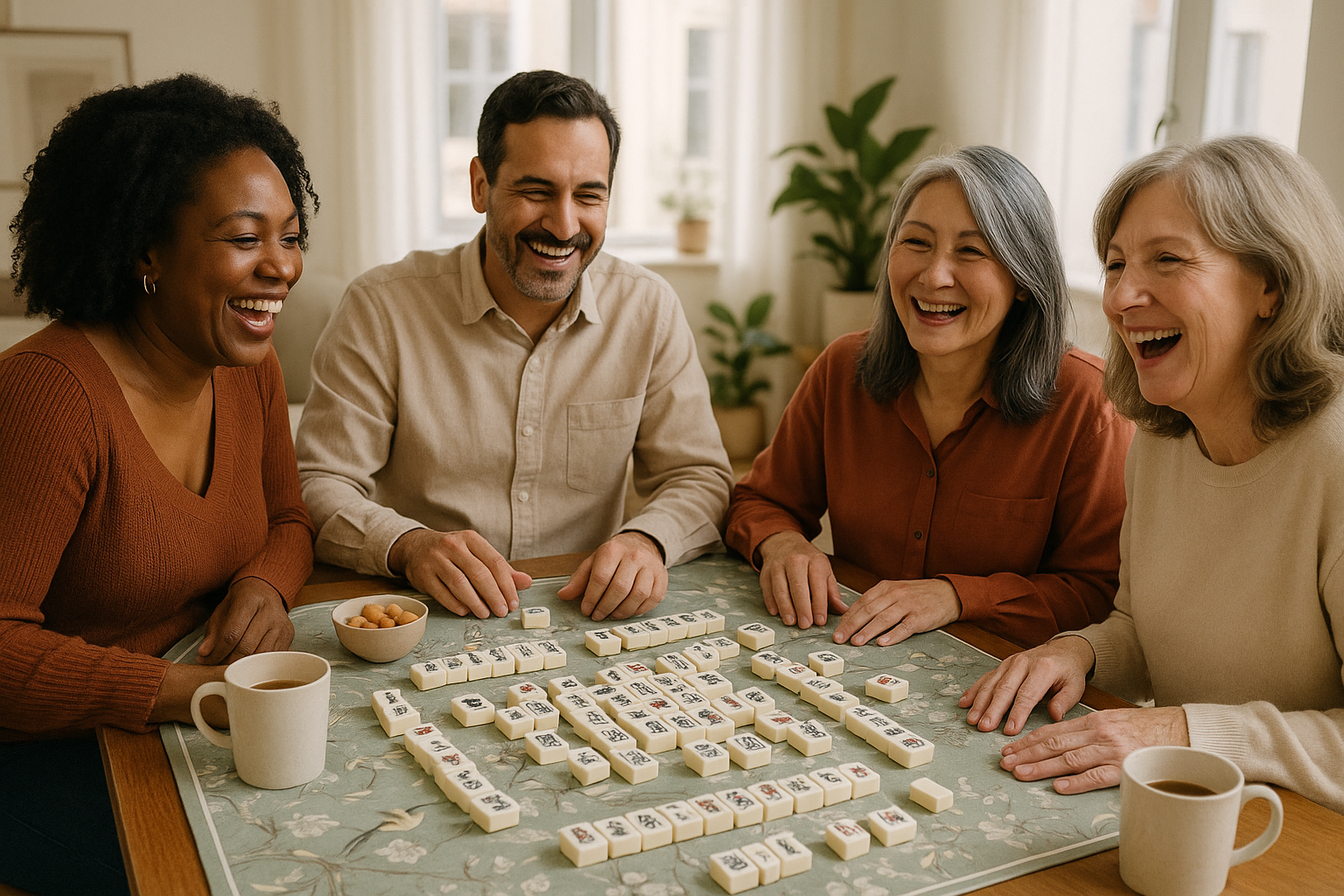
All of these conventions rest on a single foundation: mahjong is primarily a social game. It has always been a reason to gather, a structure for conversation, a way to spend time with people you enjoy. The strategy and competition are real, but they exist within the context of an experience that everyone at the table is meant to enjoy.
When in doubt about how to handle a situation at the table, ask yourself whether your choice contributes to that experience or detracts from it. That question will answer most things the rulebook does not cover.
Bring your best game. Bring your best manners. And maybe bring snacks.