Mahjong Glossary: Terms Every Player Should Know
Every term you will hear at the mahjong table, from the tiles in your rack to the calls that change the game.
By Silk Mahjong

Walk into any mahjong game and you will hear a flurry of terms that can feel like a foreign language at first. What is a pung? What happens during the Charleston? When someone shouts "Mah Jongg," what exactly are they celebrating? This glossary covers the vocabulary you need to follow along, join in, and eventually hold your own at the table. Bookmark it, print it, or just read through it once before your first game. You will be surprised how quickly the words start to stick.
The Tiles
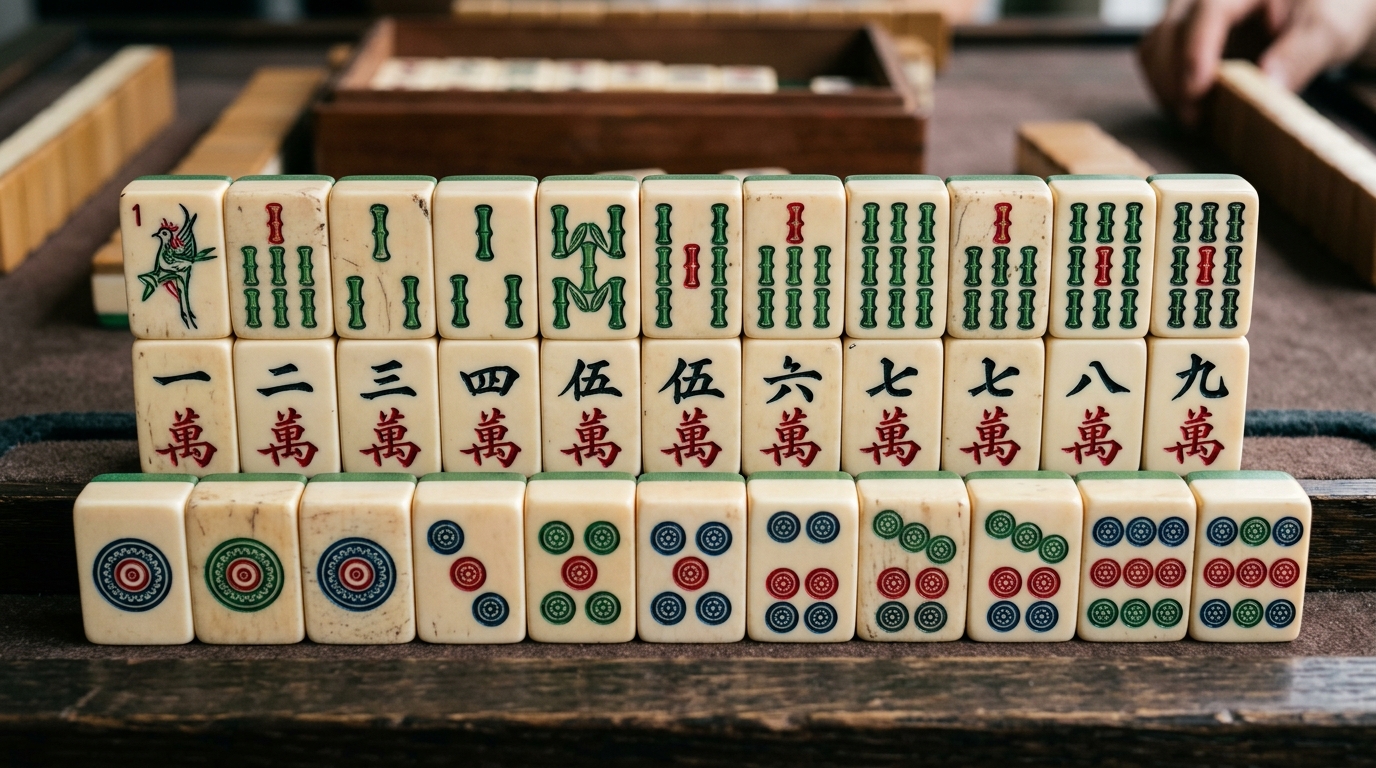
The heart of mahjong is its tiles. American Mahjong uses 152 tiles, each with a distinct name and role.
Bam refers to the bamboo suit, one of the three numbered suits in the game. Bam tiles run from one to nine and are typically illustrated with bamboo stalks. Players sometimes call this suit "bamboo" at the table.
Crak is the second numbered suit, represented by Chinese characters for the numbers one through nine. Crak is short for "characters," and the tiles feature bold red or black numerals alongside Chinese script.
Dot is the third numbered suit, depicted as circles arranged in patterns corresponding to numbers one through nine. Sometimes called "balls" or "coins" in other mahjong traditions, Dots are easy to count visually.
Winds are honor tiles representing the four compass directions: East, West, North, and South. Each wind tile appears four times in the set, giving sixteen wind tiles total. Winds are used in certain hands and also determine player seating in some game formats.
Dragons are a second category of honor tiles. The standard set includes three dragons: Red (also called the Middle dragon), Green (also called the Hatching dragon), and White (also called the Soap or blank tile). Like winds, each dragon appears four times.
Flowers are decorative tiles numbered one through eight, appearing in two sets of four. Flower tiles are used in specific hands on the annual hand card and are among the more distinctive features of American play.
Jokers are the wild cards of American Mahjong. A standard set includes eight Joker tiles. A Joker can stand in for any tile within a set of three or more of a kind (a pung, kong, or quint), but cannot be used in a pair. Jokers are what make American Mahjong more forgiving than many other styles, and learning to use them well is a major step toward playing confidently.
Hand Types
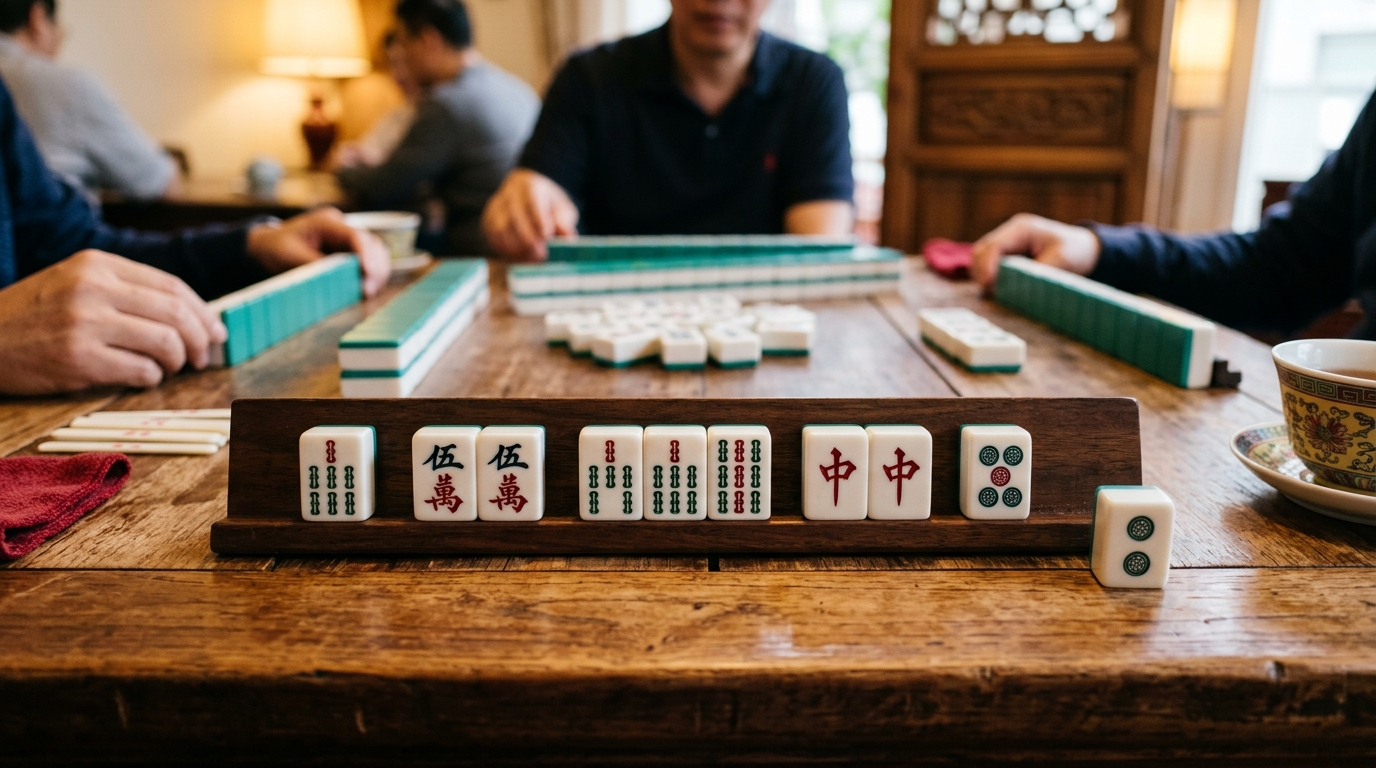
Winning in mahjong means assembling a complete hand. Hands are built from specific combinations of tiles, and knowing the terminology helps you plan your game.
Pung is a set of three identical tiles. A pung of 3 Bam, for example, means you hold three tiles each showing the number three in the bamboo suit. Pungs are the most common building block in American Mahjong hands.
Kong is a set of four identical tiles. A kong of 7 Dot would mean four tiles showing the seven of circles. Kongs appear in more complex or higher-value hands.
Quint is a set of five identical tiles. Because no suit tile appears more than four times in a standard set, a quint always requires at least one Joker. Quints show up in some of the more ambitious hands on the annual card.
Pair is two identical tiles held together. Many winning hands require exactly one pair as a component. Pairs are notable in American Mahjong because Jokers cannot be used in them; a pair must consist of two genuine matching tiles.
Concealed hand describes a winning hand in which you have not exposed any sets during play. You built the entire thing in secret, drawing and discarding until your fourteen tiles matched a pattern. Concealed hands are riskier to build but often score higher.
Annual hand card refers to the yearly publication that lists every legal winning hand and its point value. Each card is valid for one calendar year, and all four players at a table should be playing from the same edition. Some hands are available to everyone; others are for members of specific organizations. The card is the rulebook that makes American Mahjong the structured game it is.
Gameplay Terms
Once the tiles are dealt, the following terms describe what actually happens during a game.
Wall is the rectangular arrangement of tiles stacked two deep around the center of the table at the start of each hand. Players draw from the wall on their turns. As the game progresses, the wall shrinks. If the wall runs out before anyone wins, the hand is declared a draw.
Rack is the small stand each player uses to hold their tiles upright, hidden from opponents. Racks let you view your own tiles comfortably while keeping them concealed from everyone else.
Draw means taking a tile from the wall on your turn. You draw, evaluate whether the new tile helps your hand, and then decide what to discard.
Discard is a tile you choose to release from your hand after drawing. Discards are placed face-up in the center of the table, and players announce the tile name as they put it down. Reading the discard pile is one of the core skills of experienced play.
Expose means placing a completed set of tiles face-up on your rack so all players can see it. Exposing tiles happens when you claim a discard to complete a pung, kong, or quint (in a non-winning move is not permitted; you may only claim discards when they complete your final winning hand, unless local rules differ). Exposed tiles confirm to everyone what you are building.
Self-drawn describes winning by drawing the tile you needed from the wall yourself, rather than claiming a discard from another player. Hands marked as self-drawn on the annual card can only be won this way, and they typically carry a higher score. Drawing your winning tile from the wall has its own quiet satisfaction.
Joker swap is the rule allowing a player to exchange a real tile for a Joker that another player has exposed in a set on their rack. On your turn, if you hold the tile a visible Joker is substituting for, you can swap it in and take the Joker for your own hand. Joker swapping is legal only during a player's turn and only on exposed sets.
Table Calls
These are the spoken words that move the game along and signal important moments.
Mah Jongg is the call that ends the hand. When a player's fourteen tiles exactly match a hand listed on the annual card, they announce "Mah Jongg" and reveal their tiles to the table. Everyone checks the hand against the card, the score is tallied, and the next hand begins.
Charleston is the tile-passing ritual that opens every hand in American Mahjong. Before any tiles are drawn from the wall, players pass unwanted tiles to their neighbors in a specific sequence. The Charleston is unique to the American style and gives everyone a chance to improve their starting hand before play begins.
Left, Right, Across describe the directions of the passes during the Charleston. The first pass goes to the right; the second goes across the table; the third goes to the left. If a second Charleston takes place, the directions reverse.
Blind pass is a special move during the Charleston. If you do not have enough tiles you want to give away in one direction, you may pass through some of the tiles you just received from the previous direction without looking at them. You must pass at least one tile you actually chose from your own hand.
Courtesy pass is an optional final exchange that can follow the Charleston. Each pair of players sitting across from each other may agree to swap one, two, or three tiles directly with each other. Unlike the main Charleston passes, the courtesy pass is entirely optional and can be declined.
Passing tiles is the general act of sending tiles to another player during the Charleston. Passing well, meaning letting go of tiles that do not serve your hand while holding what you need, is one of the foundational skills of good play.
Scoring Terms
After a winning hand is revealed, scoring determines how much it is worth.
Points are the unit of scoring in American Mahjong. Each hand on the annual card carries a specific point value, printed alongside the hand description. Higher complexity and rarity typically command more points.
Singles and pairs is a category of hands on the annual card that involves collecting one or two of each tile in a particular group rather than the more typical sets of three, four, or five. These hands are distinctive because they require a broader spread of tiles.
Joker-less hand describes a hand built entirely without Jokers. Some hands require this, and the annual card marks them explicitly. Building a joker-less hand takes more precision but is often rewarded with a higher score.
This glossary covers the core vocabulary you need to understand and discuss American Mahjong confidently. As you play more, many of these terms will shift from definitions you looked up into words you use without thinking. That shift happens faster than you expect.