Mahjong Rules and Scoring: A Complete Reference
Everything you need to understand American Mahjong rules and scoring - from the tile hierarchy to how points are settled between players at the end of every hand.
By Silk Mahjong

Understanding the rules of American Mahjong is one thing. Getting comfortable with the scoring is another. For many players, the rules click quickly while scoring feels like a mystery for the first several sessions. This guide covers both in full, so you can sit down at any table and know exactly what is happening.
The Core Rule: Match the Card
American Mahjong is played with an annual hand card. The card lists every legal winning combination for that year, along with the point values each hand is worth. A hand is only valid if it matches one of the combinations on the card exactly. There is no improvising a winning hand from scratch.
This is both a constraint and a gift. The card removes ambiguity entirely. Either your fourteen tiles match a listed hand or they do not. And because the card changes each year, the game never goes stale.
Tile Hierarchy and Sets
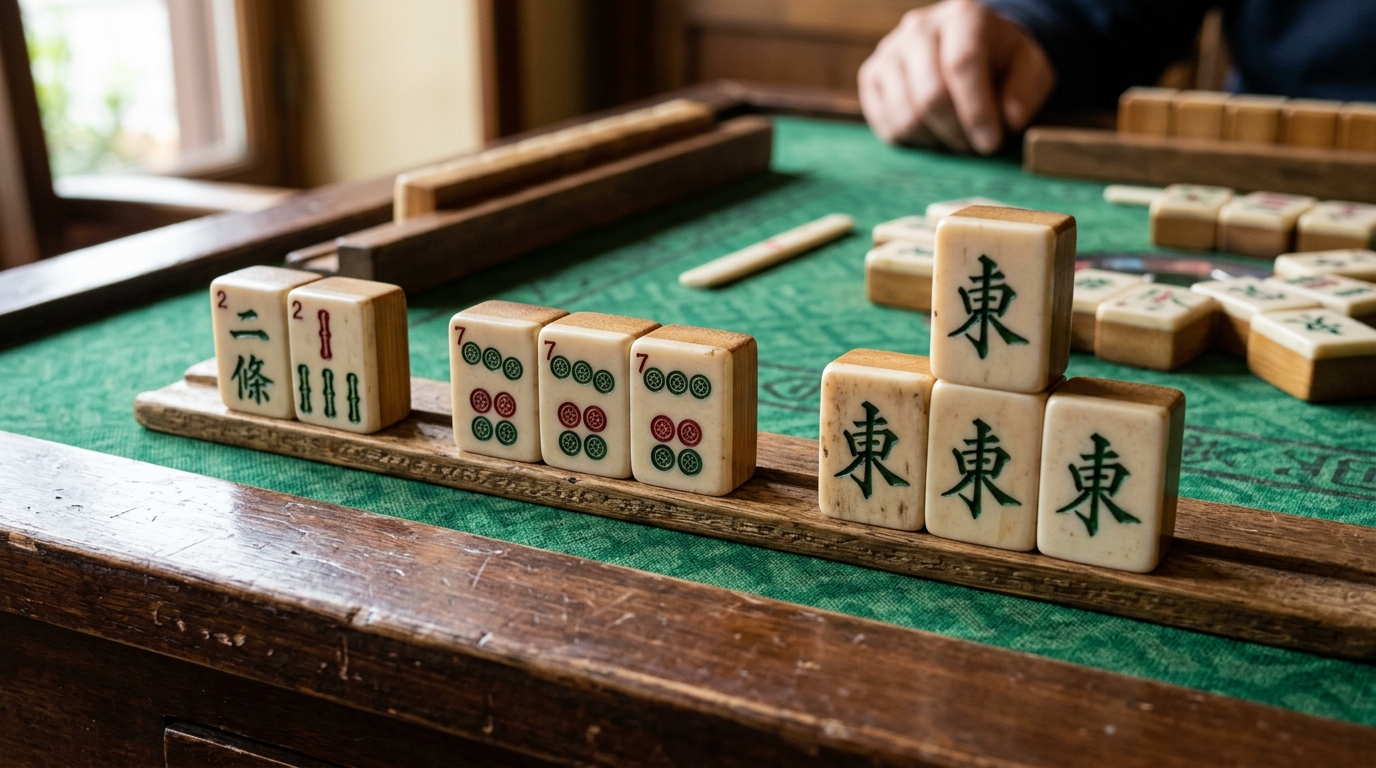
Before diving into claiming rules, it helps to know the building blocks:
Pair - Two identical tiles. Most hands require exactly one pair, though some require more.
Pung - Three identical tiles. The workhorse of most hands.
Kong - Four identical tiles. A full set of the same tile.
Quint - Five identical tiles. Only possible using Jokers to supplement.
Sextet - Six identical tiles. Rare, but some hands call for them.
Jokers can substitute for any tile within a pung, kong, quint, or sextet. They cannot be used in pairs, and they cannot be swapped into or out of pairs.
The Claiming Rules
On each turn, the active player draws from the wall and discards one tile. When a tile is discarded, any other player may claim it - but only under specific conditions.
You may claim a discarded tile only to complete your entire winning hand. This is the key rule new players often misunderstand. You cannot claim a discard simply to build toward a hand you are working on. The claimed tile must be your fourteenth tile, completing a hand that matches the card.
When you claim a discard to win, you declare Mah Jongg and reveal all fourteen tiles for the table to verify.
There is one additional claiming rule that applies during the middle of play: you may only claim a discard for a pung, kong, or any larger set, and only if the claimed tile completes a set you expose on your rack. This means you reveal that portion of your hand, which gives other players information. This mid-game claiming rule is not in standard American play - in the American game, discards can only be claimed to win. If your group plays a variant, establish this before the first hand.
Joker Rules
Jokers are one of the defining features of American Mahjong. Here are the rules that govern them:
Jokers can substitute for any tile in a set of three or more. If you need three dots and only have two, a Joker completes the set.
Jokers cannot be used in pairs. A pair must consist of two genuine matching tiles.
Jokers can be swapped. If another player has an exposed set containing a Joker, and you hold the tile the Joker is standing in for, you may swap your tile for their Joker on your turn. The Joker then comes to you and can be used elsewhere in your hand. This rule adds a layer of strategic tracking to every game: watching exposed racks for Jokers you can claim.
Jokers cannot be discarded. Once you draw a Joker, it stays in your hand. You must find a set to use it in, or your hand will not be completable.
Scoring: How Points Are Settled
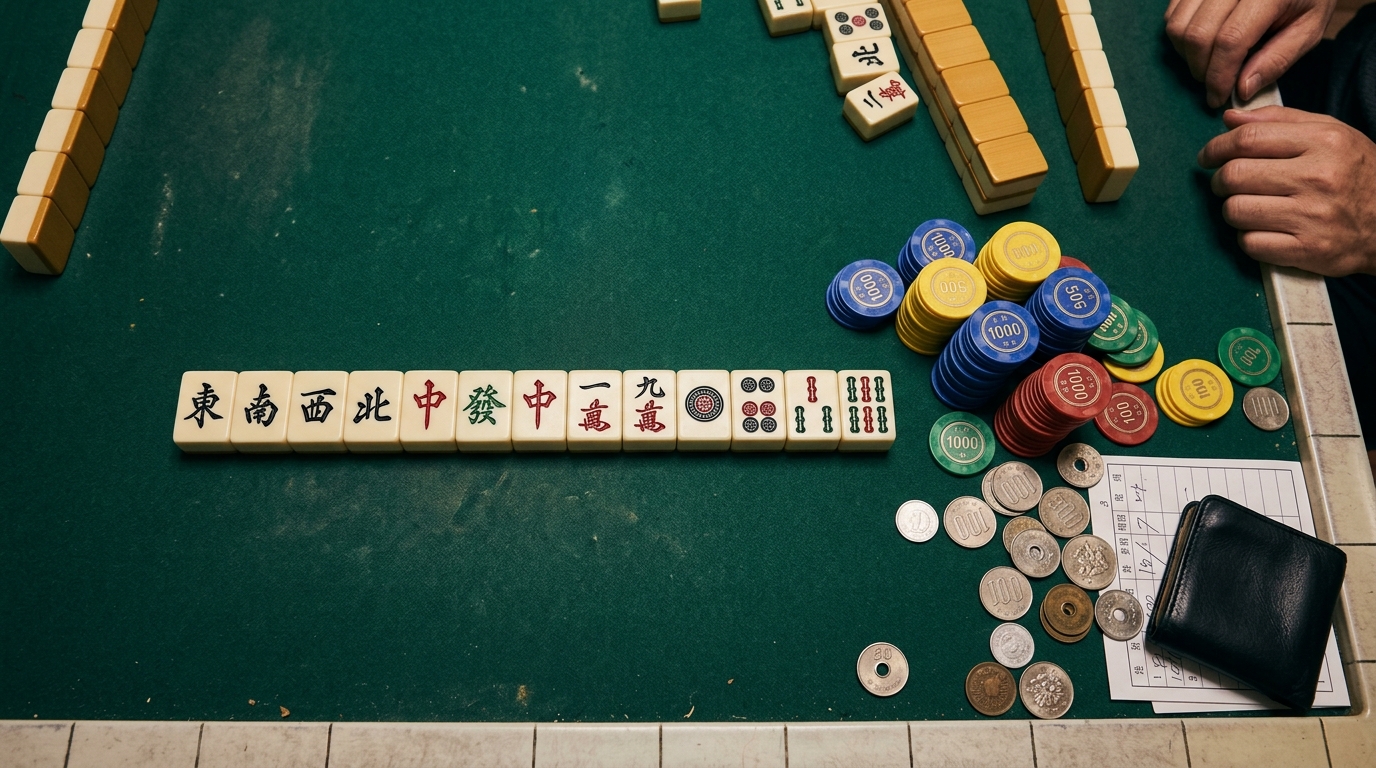
When a player calls Mah Jongg, each losing player pays the winner. The amount depends on two variables: the value of the hand as listed on the annual hand card, and whether the winner drew from the wall or claimed a discard.
Self-drawn hands (the winner draws their fourteenth tile from the wall) are typically worth more. Some hands are marked as singles and pairs only or carry other notations on the card that affect payment.
The standard payment structure works as follows:
- If the winner claimed a discard, the player who discarded the winning tile pays double the hand's listed value. The other two players each pay the standard value.
- If the winner drew from the wall, all three losing players pay the standard value of the hand.
Example: A hand worth 30 points, won by self-draw, means each of the three losers pays 30 points to the winner. Won by a discarded tile, the person who discarded pays 60 points and the other two each pay 30.
Some groups play with chips or a small cash ante; others simply track scores on paper. Neither is more correct. Establish your group's preference before play begins.
Dead Hands
If a player realizes mid-game that none of their tiles can possibly form any hand on the card, their hand is considered dead. A dead hand cannot win. The player must continue discarding each turn but cannot call Mah Jongg. It is in poor form to play a dead hand without acknowledging it, though the rules do not require disclosure.
If the wall is exhausted before anyone calls Mah Jongg, the hand is a draw. No points change hands, and a new hand begins.
Etiquette Points Worth Knowing
Rules govern the game; etiquette governs the table. A few conventions that every regular player should know:
Name your discards clearly as you place them. This helps players who may not have heard the click of the tile.
Do not take a discard and then change your mind. Once you have touched a discard, you are committed.
Call Joker swaps promptly. If you notice a Joker is available, claim it on your turn rather than waiting.
And always verify a winning hand together. Mah Jongg is a social game - the moment of reveal is part of the pleasure.