Mahjong Strategy Tips: How to Think at the Table
Strategy in mahjong is less about luck and more about decision-making. Here are the principles that separate good players from lucky ones.
By Silk Mahjong

People who have never played mahjong sometimes assume it is mostly luck. After all, you draw tiles randomly from the wall. How much skill can there really be? The answer becomes obvious the first time you sit across from someone who consistently wins. Watch them long enough and you notice they are rarely surprised. Their discards seem deliberate, their timing is calm, and their hands come together with a regularity that luck alone cannot explain.
Mahjong is a game of incomplete information and managed uncertainty. You cannot control what you draw, but you can absolutely control what you do with what you have. The tips below will not guarantee wins, but they will give you a framework for thinking at the table. That framework is where improvement begins.
Choose Your Hand Early and Commit
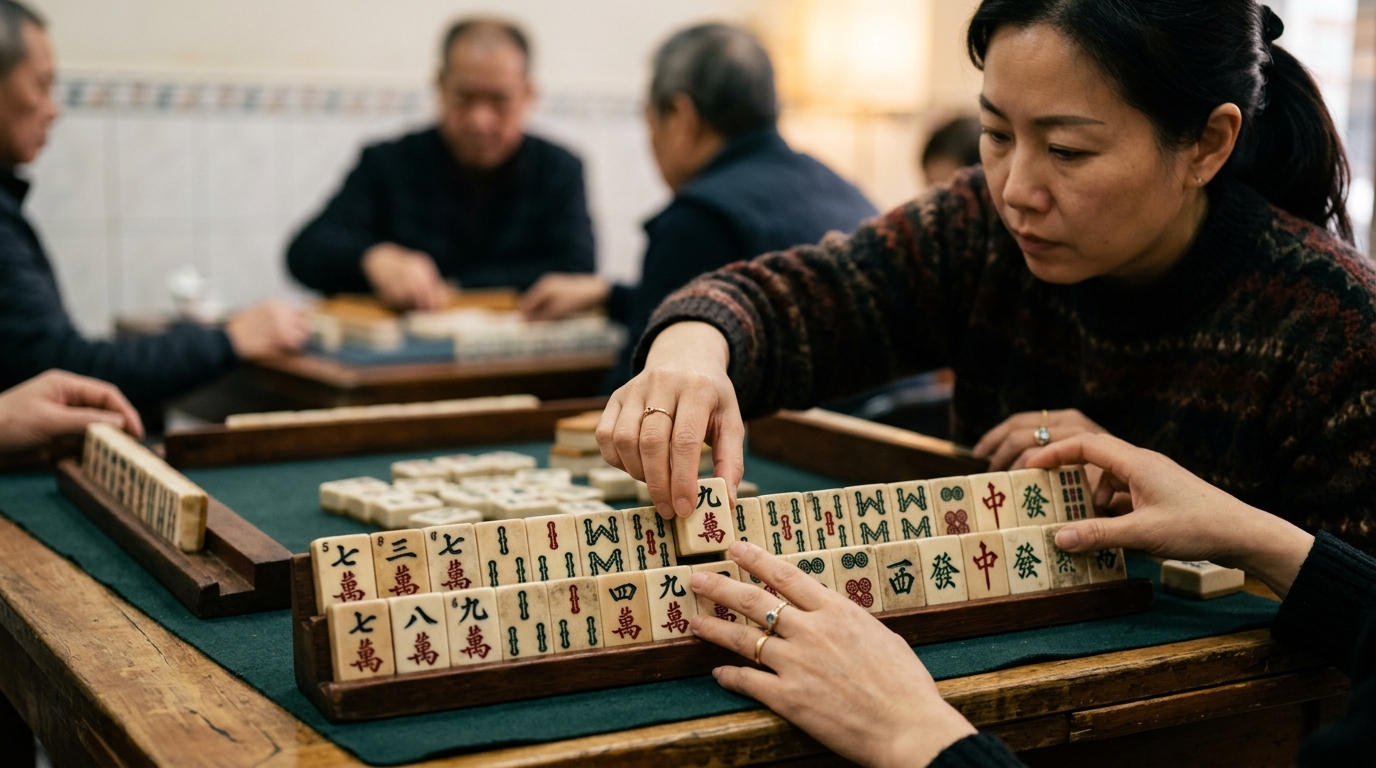
The most common mistake beginners make is staying vague for too long. They look at their tiles after the Charleston and see several possible directions, so they try to keep all their options open. The result is a hand that never really comes together.
Strong players scan the annual hand card quickly after the Charleston, identify one or two realistic targets, and commit. Commitment means you start actively discarding tiles that do not serve your chosen hand, rather than holding onto them just in case.
This does not mean you can never change course. Mid-game pivots happen and are sometimes necessary. But your default posture should be decisive. Pick a hand you can realistically build, and build it.
How do you know if a hand is realistic? Look at what you already have. If you need eight specific tiles and you hold two of them, that hand is probably too ambitious. If you need six tiles and you already hold four, that is a much more promising start. Lean toward hands where you have the most tiles already in place.
Read the Discard Pile Like a Story
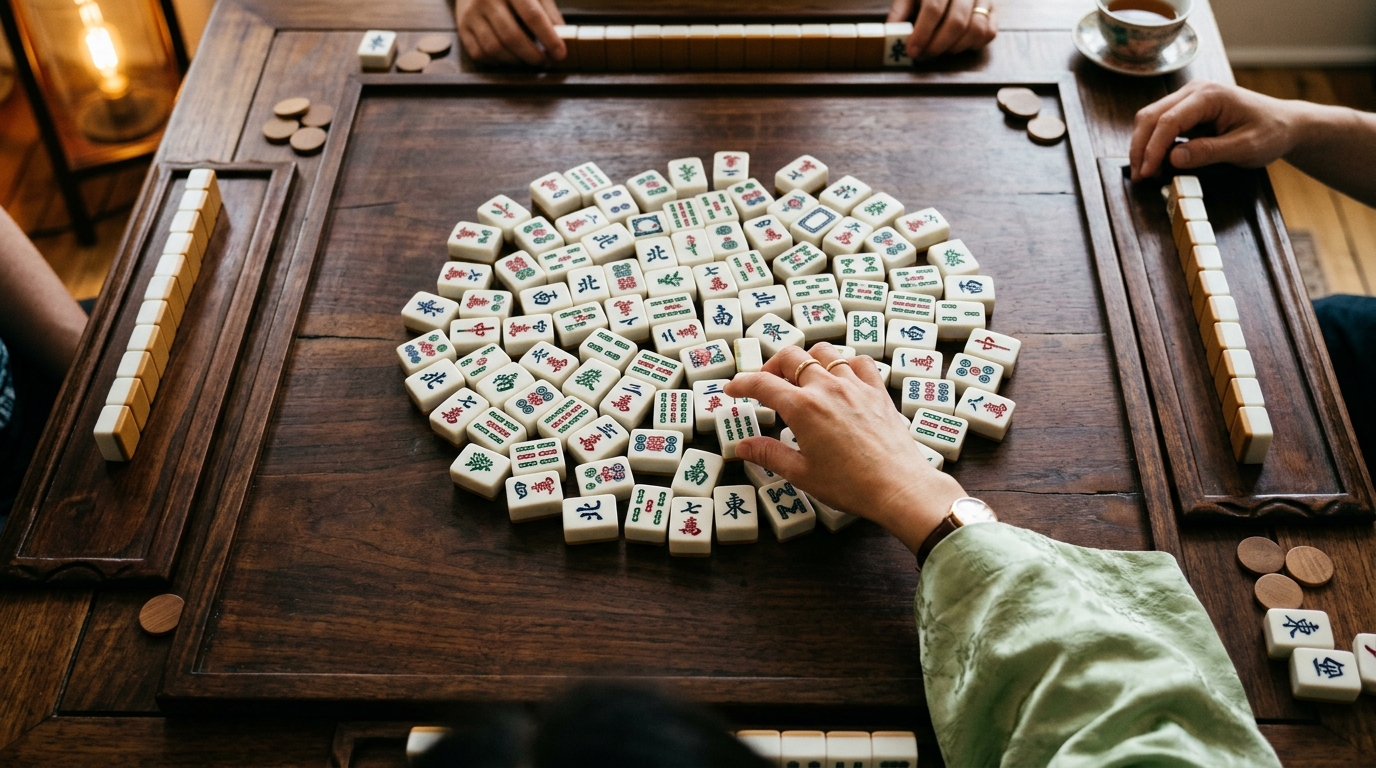
The pile of face-up tiles in the center of the table is one of the most valuable sources of information in the game, and most beginners ignore it entirely. Do not be that player.
Every tile in the discard pile tells you something. If three 4 Bam tiles have already been discarded, you know there is only one left in the entire game. If you need a 4 Bam to complete your hand, you are essentially playing against a wall. Pivot.
Conversely, if a tile you need has not appeared in the discard pile and has not been claimed or exposed by anyone, there is a reasonable chance it is still live in the wall or in someone else's hand. That is useful information.
As you get more experienced, start reading the discard pile not just for counts but for patterns. What are your opponents not discarding? If someone has not discarded a single Dot tile in ten rounds, they are probably building a Dot-heavy hand. That tells you which tiles to hold onto and which to pass safely.
Defensive Discarding: What Not to Throw
At some point in every game, you will realize that you are probably not going to win this hand. Maybe your tiles have come in awkwardly, or the wall is running low and you are too far away. In these moments, the goal shifts from winning to not losing badly, and that means thinking carefully about what you discard.
The core defensive principle is simple: do not discard tiles that could complete an opponent's hand. But how do you know what opponents need?
Start with the discard pile again. If no one has discarded a particular tile all game, that tile is potentially dangerous to throw. Everyone might be holding it, or worse, someone might be waiting for it.
Pay attention to exposed sets on your opponents' racks. If you can see that someone has three 8 Crak exposed, do not throw 8 Crak. That is obvious. Less obvious: if someone has exposed two pungs that are clearly pointing toward a specific hand on the annual card, look at what other tiles that hand requires and avoid discarding those as well.
Defensive play is most important in the late stages of a game when someone is clearly close to winning. In the early rounds, you have more freedom to discard without worry. As the wall shrinks and hands mature, every discard carries more weight.
Assess Your Hand After the Charleston, Not Before
New players often form opinions about their hand before the Charleston is complete. They look at their original thirteen tiles, decide they have a terrible deal, and spend the passing rounds in a kind of resigned despair. This is a mistake.
Your hand after the Charleston can look completely different from your starting tiles. The passes can bring exactly the groups you needed or redirect you toward a hand you had not considered. Treat the Charleston as the real deal and assess only once it is over.
After the last pass, before the first draw from the wall, take a moment. How many tiles do you already have that match your target hand? What are you still missing? Is there a backup hand you could pivot to if the primary does not come together? Answering these questions in the first few draws will save you a lot of confusion later.
Joker Strategy: Power, Patience, and Swapping
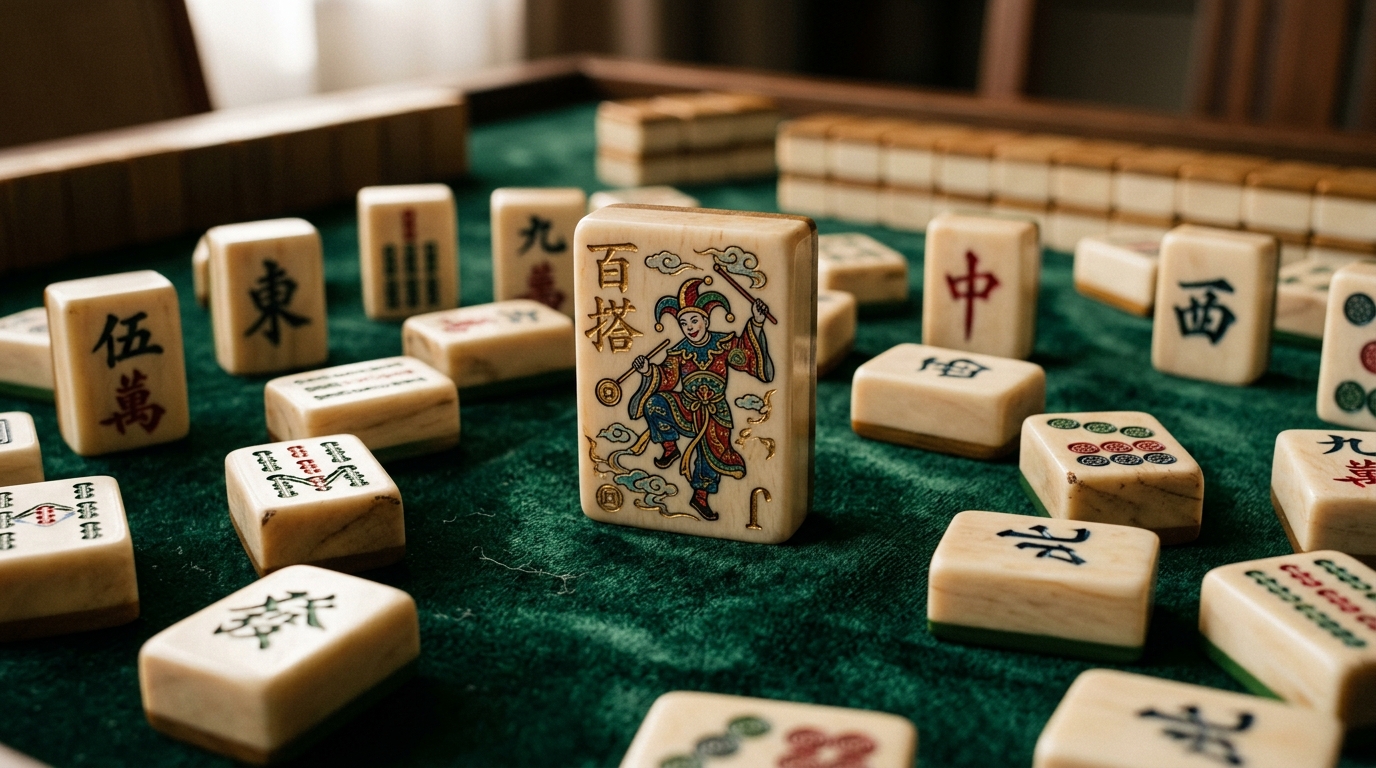
Jokers are the most powerful tiles in American Mahjong, and using them well is a real skill.
The basic principle: Jokers go where they do the most work. In a hand where you need a kong of 5 Dot, a Joker gets you most of the way there immediately. In a hand built around pairs, a Joker is useless. Before placing a Joker in a particular set, make sure that set is actually part of your winning hand.
Resist the temptation to expose Jokers too early. When you expose tiles, you reveal information to the table. An exposed Joker in a set tells other players exactly what you are building and which tiles might complete your hand. If you can keep your winning hand concealed, do so for as long as possible.
The Joker swap rule is one of the more entertaining elements of the game. Any player, on their turn, can swap a real tile for a Joker that is sitting in an exposed set on another player's rack. This means Jokers are never truly locked away. If you see a Joker in an opponent's exposed set and you hold the tile it is substituting for, swapping it gives you a Joker to use in your own hand.
This creates an interesting dynamic: players who expose Jokers in their sets are vulnerable to having them taken. Experienced players factor this risk into decisions about when and whether to expose tiles containing Jokers.
The Psychology of Tile Calling: Should You Claim Every Pung?
When another player discards a tile you need, you have the option to call it. But you can only call a discard when it completes your final winning hand. This rule limits claims to the decisive moment.
Even so, beginners sometimes feel the urgency to act whenever they see a tile they want. The strategic question is whether calling that tile actually serves your goal. Claiming tiles is only relevant in the endgame when your hand is otherwise ready.
Focus instead on the lead-up: what tiles can you draw from the wall to move you forward, and what tiles in the discard pile confirm whether those tiles are still available? The psychological discipline of staying focused on your hand rather than being distracted by what others are discarding is something experienced players cultivate over time.
Knowing When to Switch Hands
Sometimes you are three rounds in, building toward a specific hand, and it becomes clear that what you need is simply not coming. The tiles you have collected in the discard pile have appeared several times already, or you are sitting with a half-built hand and no path forward.
This is the moment many players freeze. They have committed so much to their chosen hand that switching feels like failure. Do not let that instinct trap you.
Switching hands mid-game is a completely valid strategic move. The key is assessing quickly: given what you hold right now, what hand on the annual card is closest to completion? If a different hand would require only two or three more tiles and your current target would need six or seven, the switch is obvious.
The risk in switching is that you have to discard tiles you have been hoarding for your old hand, and those discards might help your opponents. Try to switch early enough in the game that this is not a crisis. Mid-game pivots are fine; late-game pivots are costly.
Play for Defense When the End Is Near
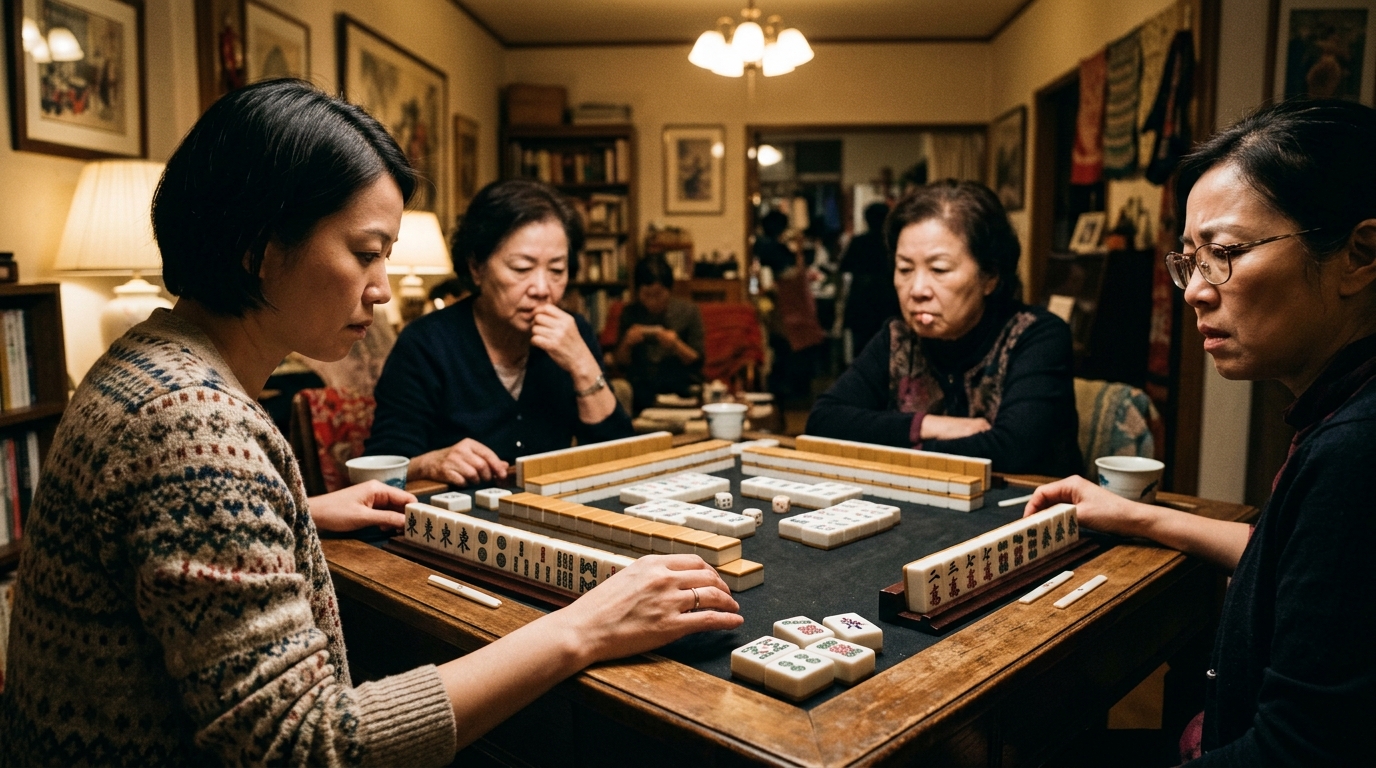
As the wall approaches its final rows, pay close attention to your opponents' racks. How many tiles do they have left to call? Are any of them sitting with most of their tiles exposed? Players with exposed hands and only one or two tiles remaining are in the danger zone.
When someone is that close to winning, your priority shifts entirely to defense. Look at your remaining tiles and ask: which of these could complete their hand? Discard from the back of the list first, meaning tiles that seem least likely to be what they need, and hold onto anything that feels risky for as long as you can.
Experienced players sometimes hold back a tile they know is safe for exactly this situation, saving it as a defensive discard when the pressure is on. It is a small thing, but small things accumulate into wins.
Strategy in mahjong does not announce itself the way it does in chess. There is no moment where the optimal move is obvious to everyone. Instead, good play is a series of small, quiet decisions that compound over the course of a hand. Tile selection, hand reading, Joker timing, defensive discarding: none of these individually decides a game, but together they are the difference between players who seem to win a lot and players who cannot figure out why they keep losing.
Start with one or two of these principles and build from there. The game will teach you the rest.